
How to Help an Overweight Cat Lose Weight Safely
Cats cannot be crash-dieted. Cutting food too fast risks fatal liver failure, so feline weight loss is slow, measured and supervised. Here's how it's done.
 Justin Manuel Lantigua Germosen 8 min read
On this page
Feline obesity is one of the most common preventable health problems in pet cats, and it is also one of the most dangerous to fix badly. Nearly everything that works for a dog on a diet is wrong for a cat.
The reason is a liver condition called hepatic lipidosis. Cut a cat’s food sharply and their body sends fat to the liver faster than the liver can process it. In an overweight cat that suddenly eats much less, that can become life-threatening within days. So feline weight loss is slow, measured, and done with your vet rather than around them.
Key Takeaways
- Never crash-diet a cat. Rapid calorie restriction can cause fatal liver disease.
- Safe loss is roughly 0.5 to 2 percent of body weight per week, which is grams rather than hundreds of grams.
- Judge progress by body condition and a monthly weigh-in, not by how the cat looks in a photo.
- A cat that stops eating during a diet is an emergency, not a success.
First, Confirm There Is a Problem
Weight alone means little without a frame of reference. A large-framed Maine Coon at 7 kg may be lean; a small domestic shorthair at the same weight is carrying a great deal.
Assess by hand, in three checks:
- Ribs. You should feel them easily under a thin layer of fat, like the back of your hand. Having to press to find them means excess.
- Waist from above. Looking down at a standing cat, there should be a visible narrowing behind the ribs. A straight or bulging outline means excess.
- Profile from the side. A slight upward tuck towards the back legs is normal. A belly that hangs level or swings means excess.
One caveat that catches people out: many cats have a loose flap of skin along the lower belly called the primordial pouch. It swings when they walk, it is entirely normal, and it is not fat. Judge by ribs and waist instead.
Some breeds carry weight more invisibly than others. A British Shorthair has a coat dense enough to disguise real gain, and a Persian even more so.
Why the Vet Comes First
Two reasons, and both matter.
Weight gain can be a symptom. Hypothyroidism is rare in cats, but reduced activity from undiagnosed arthritis is common and often missed, because cats do not limp the way dogs do. They simply stop jumping.
Weight loss can be too. If your cat is losing weight without a diet, that is a different and more urgent conversation. Combined with increased drinking it points at diabetes or hyperthyroidism, and both need testing rather than dietary management.
Your vet will set a target weight and a daily calorie figure. That number is the plan. Guessing it yourself is how cats get restricted too hard.
The Method
Weigh the Food
This is the step that does most of the work, and the one most owners skip. Scoops vary, cups vary, and eyeballing a portion is reliably wrong in the generous direction. A kitchen scale costs very little and removes the guesswork permanently.
Our cat food calculator gives a starting daily figure from weight and activity, and our guide to how much to feed a cat covers portioning in more detail. Use those to sanity-check what your vet sets, not to replace it.
Stop Free-Feeding
A bowl topped up through the day makes intake impossible to measure and is one of the main drivers of feline obesity. Move to measured meals, two to four a day.
In a multi-cat household this gets harder, because the cat on a diet will simply eat the other cat’s food. Separate feeding stations in different rooms, or timed feeders, are usually necessary rather than optional.
Consider Wet Food
Wet food is roughly three-quarters water, so a satisfying portion carries fewer calories than the same volume of kibble. Many cats do better on it during weight loss for that reason, and it raises water intake at the same time. Our guide to wet versus dry food covers the wider trade-offs.
What matters in the end is total daily calories. Format helps the cat feel fed; it does not override arithmetic.
Count the Treats
Treats, milk, scraps and the food a cat gets from another household member all count, and together they routinely undo an otherwise correct plan. Agree in the house who feeds the cat and how much.
If you give treats, take those calories out of the daily allowance. And check what you are offering: our guide to foods toxic to cats covers what should not be in the bowl at all, and milk is not the treat most people assume.
Make Them Work For It
Cats evolved to hunt many small meals. A bowl delivered twice a day satisfies the calories and none of the behaviour, and boredom eating fills the gap.
Puzzle feeders, treat balls and food scattered in a few places turn eating into activity. This matters most in households that are out all day, and our guide to cats and an empty house covers the wider enrichment picture.
Add short, real play sessions: ten to fifteen minutes with a wand toy, ending in a catch and then a meal, follows the sequence cats are built around.
Tracking It Properly
Weigh the cat monthly, on the same scales, and write it down. Bathroom scales work if you weigh yourself, then yourself holding the cat, and subtract, though a baby scale is far more precise and small changes are what you are looking for.
Expect 0.5 to 2 percent of body weight per week. For a 6 kg cat that is roughly 30 to 120 g. It looks like nothing. It is the right speed, and a full plan often runs six months to a year.
Re-check body condition monthly alongside the number. The scales and your hands together tell you more than either alone.
The Warning Signs to Stop and Call
Take these seriously. This is where feline weight loss differs from canine weight loss most sharply.
| Sign | What to do |
|---|---|
| Refusing food for more than 24 hours | Contact your vet the same day. In an overweight cat this is how hepatic lipidosis starts |
| Losing weight much faster than planned | Stop and call. Too fast is dangerous, not efficient |
| Lethargy, hiding, or a cat that seems unwell | Veterinary assessment, not a diet adjustment |
| Yellowing of the gums, eyes or ear skin | Emergency. Jaundice suggests liver involvement |
| Vomiting or drooling alongside reduced appetite | Same-day veterinary advice |
A dog that skips a meal on a diet is usually fine. A cat that skips meals is a different situation entirely, and the difference is the whole reason this guide exists.
Frequently Asked Questions
How quickly should a cat lose weight? Slowly. Veterinary guidance generally puts safe feline weight loss at roughly 0.5 to 2 percent of body weight per week, which for most cats is a matter of a few grams. Faster than that risks hepatic lipidosis, a serious and sometimes fatal liver condition. A cat losing weight rapidly, or one that has stopped eating, needs a vet rather than encouragement.
Why is crash dieting dangerous for cats but not dogs? Cats mobilise body fat to the liver much faster than they can process it. When intake drops sharply, fat floods the liver and overwhelms it, causing hepatic lipidosis or fatty liver disease. It can develop within days in an overweight cat that suddenly stops eating, and it is life-threatening. This is why feline weight loss is always gradual and supervised.
How do I know if my cat is overweight? Use body condition rather than the scales alone. You should be able to feel the ribs easily under a thin layer of fat, see a waist behind the ribs when looking down from above, and see a slight tuck rather than a sag from the side. A rounded outline with no waist, ribs you have to press for, and a swinging belly pouch all point to excess weight.
Does wet or dry food work better for weight loss in cats? Wet food helps many cats because it is lower in calories per volume, so the cat eats a satisfying amount for fewer calories, and it raises water intake at the same time. What actually determines weight loss is total daily calories, not the format. Whichever you use, weigh or measure portions rather than eyeballing them.
The takeaway
Getting weight off a cat is an exercise in patience rather than discipline. Weigh the food, stop the free bowl, count everything including what other people in the house hand over, and check the scales once a month expecting a number that looks too small to matter. What you must not do is speed it up. A cat that stops eating is in more danger than a cat that is still overweight, and that single fact should shape every decision along the way.
This article is for general informational purposes and is not a substitute for veterinary advice. Any weight-loss plan for a cat should be set and monitored by your veterinarian, and a cat that stops eating needs veterinary attention urgently.
Sources
Related articles
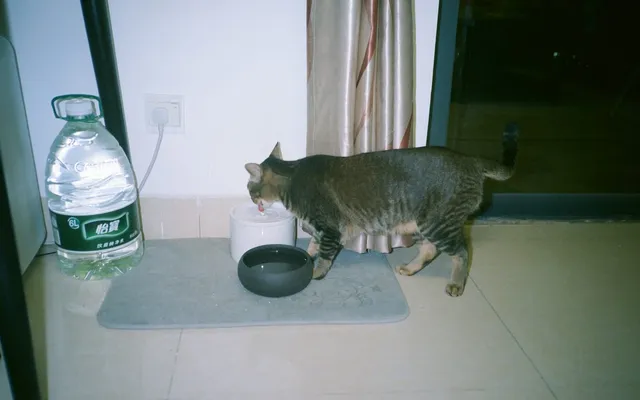
Is My Cat Drinking More Water Than Normal?
A cat suddenly emptying the water bowl is one of the most useful early warnings you get. Here's how much is normal, how to measure it, and what it can mean.
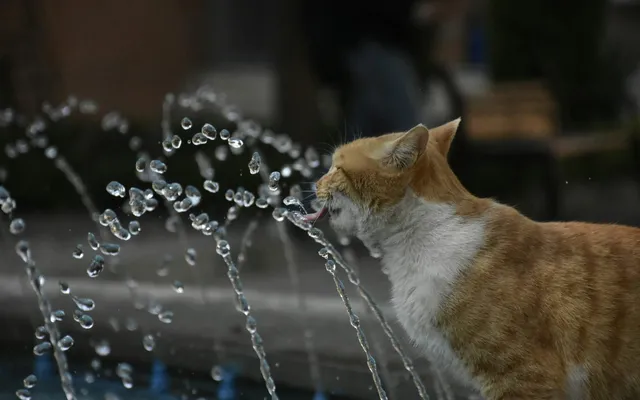
How to Choose a Cat Water Fountain
Most fountain complaints come down to four things: pump noise, filter cost, the material, and how easy it is to clean. Here's what to check before you buy.
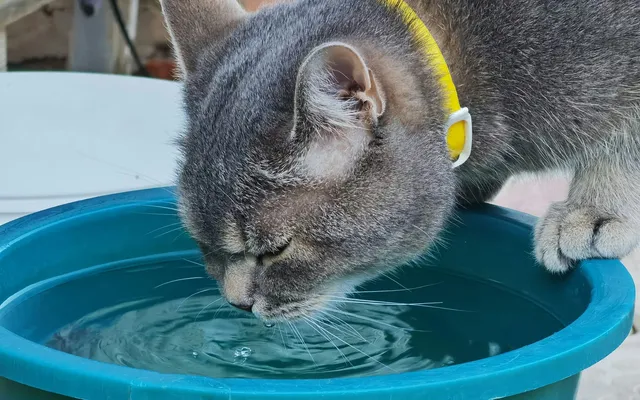
Is Milk Bad for Cats? The Truth About Dairy
Cats and milk seem like a classic pairing, but most adult cats are lactose intolerant. Learn why milk upsets cats and what safe alternatives exist.