
Is My Cat Drinking More Water Than Normal?
A cat suddenly emptying the water bowl is one of the most useful early warnings you get. Here's how much is normal, how to measure it, and what it can mean.
 Justin Manuel Lantigua Germosen 7 min read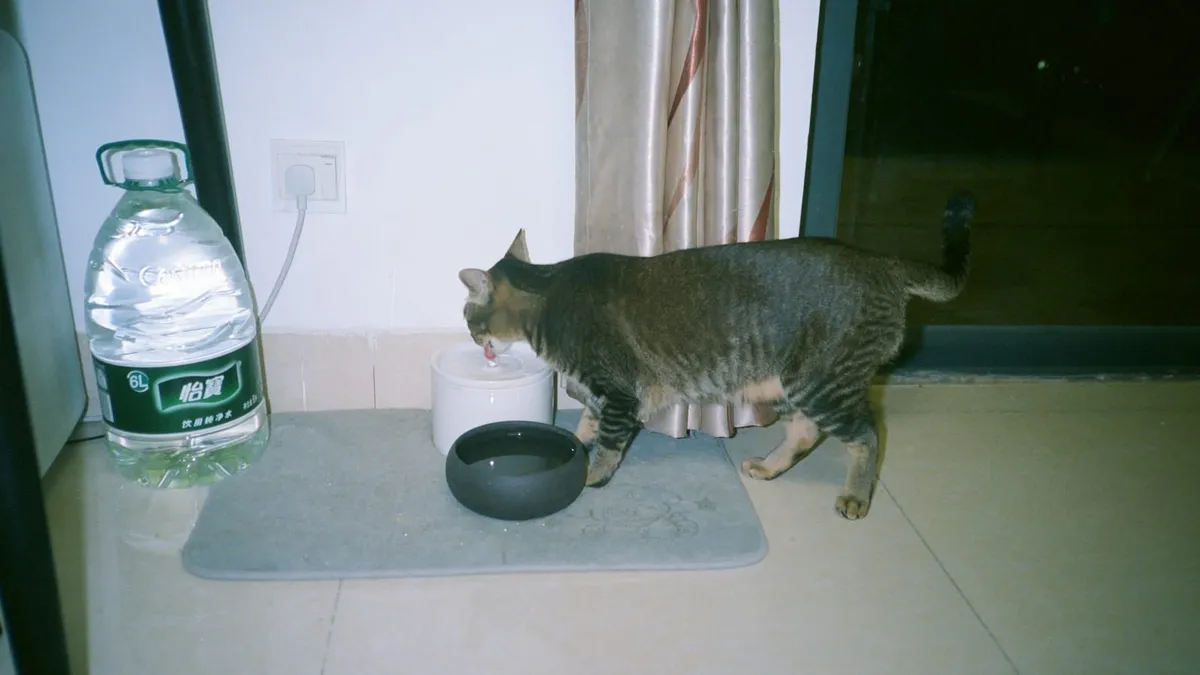
On this page
Cats are built to get most of their water from what they eat. Their wild ancestors were desert animals living on prey that was roughly three-quarters water, and the modern cat has inherited a famously weak thirst drive to match. That’s why a cat who suddenly starts draining the bowl, or sitting at a running tap, is worth paying attention to.
Increased thirst is one of the earliest and most useful warning signs in cats, precisely because they’re so good at hiding everything else. It’s often the thing an owner notices weeks before anything else looks wrong.
Key Takeaways
- A rough reference is about 50 ml per kilogram of body weight per day from all sources, food included.
- Sustained drinking above roughly 100 ml per kilogram per day is considered abnormal.
- The big three causes are kidney disease, diabetes and hyperthyroidism, and all three become more likely with age.
- What matters most is change: a cat whose drinking has clearly increased over weeks deserves a blood and urine test, even if they seem well.
How Much Is Normal
The commonly cited figure is around 50 ml per kilogram of body weight in twenty-four hours, counting everything, so a 4 kg cat needs about 200 ml a day in total.
The word “total” is the important part. A cat eating wet food is getting a large share of that from the food itself, because tinned and pouch food is typically around 75 to 80 percent water. That cat may drink almost nothing visible and be perfectly hydrated. A cat on dry food, which is roughly 10 percent water, has to make up the difference at the bowl, and will look like a much heavier drinker for entirely normal reasons.
This is why a diet change is one of the first questions to ask. Switching a cat from pouches to kibble will increase visible drinking, and that isn’t a symptom. Our guide to wet food versus dry food for cats covers the wider trade-offs, and the cat food calculator works out portions for either.
Weather matters too, as does activity, as does a course of certain medications. Steroids and diuretics both increase thirst, and your vet will have mentioned that if your cat is on them.
How to Actually Measure It
“He seems to be drinking more” is a genuinely useful observation, and a number is far more useful. Vets take a measured figure seriously.
- Fill the bowl with a measured amount of water in the morning, using a kitchen jug.
- Close off other sources where you can. Shut the bathroom door, keep the toilet lid down, empty any outdoor collection points.
- Twenty-four hours later, pour what’s left back into the jug and note the difference.
- Set a second, identical bowl with a measured amount somewhere the cat can’t reach. Whatever that one loses is evaporation, and you subtract it.
- Repeat for three days and take the average, because individual days vary a lot.
Then divide by your cat’s weight in kilograms. Under about 50 ml/kg is unremarkable. Over 100 ml/kg on a sustained basis is the threshold most vets treat as clearly abnormal, and anything in between is worth mentioning if it represents a change.
Multi-cat households make this much harder, and it’s a fair thing to raise with your vet rather than trying to solve at home.
What Increased Thirst Can Mean
Chronic Kidney Disease
The most common cause in older cats, and increased drinking with increased urination is typically the first sign. Failing kidneys can’t concentrate urine properly, so the cat loses more water and drinks more to compensate. It’s often accompanied by gradual weight loss, a duller coat and a fussier appetite.
Kidney disease can’t be cured, but it is very manageable, and cats diagnosed early on diet and monitoring often do well for years. Early is the operative word, which is the whole argument for taking a thirst change seriously.
Diabetes Mellitus
Excess glucose spills into the urine and drags water with it, so a diabetic cat urinates more and drinks more to keep up. The classic combination is heavy drinking and a big appetite alongside weight loss, which owners often find contradictory. Overweight and indoor cats are at higher risk, and our guide to feline diabetes covers the signs and management in detail.
Hyperthyroidism
An overactive thyroid speeds up the metabolism of an older cat. Increased thirst comes alongside weight loss despite a good or ravenous appetite, restlessness, sometimes vocalizing at night, and often a poor coat. It’s very treatable once identified. Our guide to hyperthyroidism in cats has the fuller picture.
Urinary Tract Problems
Cats with bladder inflammation or infection may drink and urinate more, often with straining or going outside the litter box. Worth noting that a male cat straining without producing urine is a genuine emergency rather than a thirst question. Our guide to urinary tract problems in cats covers the difference.
Less Common Causes
Liver disease, certain hormonal conditions, some cancers and, occasionally, behavioural water-seeking. These are much rarer, and they’re the reason diagnosis belongs with a vet and a blood test rather than a checklist.
What to Tell Your Vet
A useful appointment starts with specifics, not impressions. Come with:
- The measured daily intake, and your cat’s current weight
- When you first noticed the change, in weeks or months
- Whether the litter tray is heavier, or needs changing more often
- Any weight change, appetite change or coat change
- Whether the food has changed recently, and to what
- Any medications, including flea and worm treatments
Expect blood tests and a urine sample. Urine specific gravity, which measures how concentrated the urine is, is often the single most informative test here, and it’s the reason your vet may ask you to collect a sample using non-absorbent litter.
What Not to Do
Don’t restrict water. If a cat is drinking more because they’re losing more, taking the water away causes dehydration quickly and doesn’t treat anything. The only exception is specific veterinary instruction.
Don’t wait for other symptoms. The value of increased thirst as a sign is that it usually arrives first. A cat who is drinking heavily and otherwise looks fine is exactly the cat you want to test, because the alternative is testing them six months later when they’ve lost a kilo.
Don’t assume it’s age. Older cats are not supposed to drink more. Age raises the likelihood of the conditions that cause it, which is a different statement.
Frequently Asked Questions
How much water should a cat drink per day? A common veterinary reference point is roughly 50 ml per kilogram of body weight per day from all sources, food included, so about 200 to 250 ml for a typical 4 to 5 kg cat. A cat eating mostly wet food takes much of that from the food and may barely touch the bowl. Persistently drinking more than about 100 ml per kilogram per day is generally considered abnormal and worth investigating.
Why has my cat suddenly started drinking a lot? The three most common medical causes in cats are chronic kidney disease, diabetes mellitus and hyperthyroidism, all of which are more likely with age. Increased thirst is often the first thing owners notice with any of them. There are innocent explanations too, such as hot weather or a recent switch from wet food to dry, but a genuine, sustained increase should be checked.
How do I measure how much my cat actually drinks? Measure a known volume into the bowl in the morning, keep other water sources closed off where you can, and measure what’s left twenty-four hours later. Allow for evaporation by leaving an identical bowl of water somewhere the cat can’t reach and subtracting that loss. Repeat over three days, because single days vary. In a multi-cat house this is harder, and your vet may suggest other ways to work out who is drinking.
Is it a problem if my cat drinks from the tap instead of the bowl? Not by itself. Many cats prefer moving water and dislike bowls near their food or in busy spots, which is a preference rather than a symptom. What matters is the total amount and whether it has changed. A cat who has always liked the tap is different from a cat who suddenly camps at it.
The takeaway
Cats are poor drinkers by design, so a cat who starts drinking noticeably more has changed in a way that usually means something. Measure it over three days, weigh your cat, and take both numbers to your vet. The three conditions at the top of the list are all more treatable the earlier they’re caught, and increased thirst tends to show up well before the weight loss that finally prompts most appointments.
This article is for general informational purposes and is not a substitute for veterinary advice. Never restrict a cat’s access to water without specific veterinary instruction, and seek urgent help for any cat straining to urinate without producing urine.
Sources
Related articles
How to Help an Overweight Cat Lose Weight Safely
Cats cannot be crash-dieted. Cutting food too fast risks fatal liver failure, so feline weight loss is slow, measured and supervised. Here's how it's done.
How to Choose a Cat Water Fountain
Most fountain complaints come down to four things: pump noise, filter cost, the material, and how easy it is to clean. Here's what to check before you buy.
Is Milk Bad for Cats? The Truth About Dairy
Cats and milk seem like a classic pairing, but most adult cats are lactose intolerant. Learn why milk upsets cats and what safe alternatives exist.