Cat Dandruff and Dry Skin: Causes and What Helps
White flakes along a cat's back are rarely just dry air. Here's what actually causes feline dandruff, including the causes that have nothing to do with skin.
Brushing, bathing, and nail care for cats that would rather not — practical routines that don't turn into a fight.
White flakes along a cat's back are rarely just dry air. Here's what actually causes feline dandruff, including the causes that have nothing to do with skin.
Most cats rarely need baths thanks to self-grooming, but some situations call for it. Learn how often to bathe a cat and how to do it safely and calmly.
Hairballs are common in cats, but frequent ones may signal a problem. Learn what causes hairballs, how to prevent them, and when they need a vet's attention.
Trimming a cat's nails doesn't have to be a fight. Learn a calm, step-by-step approach to cat nail trims, the right tools, and what to do if you nick the quick.
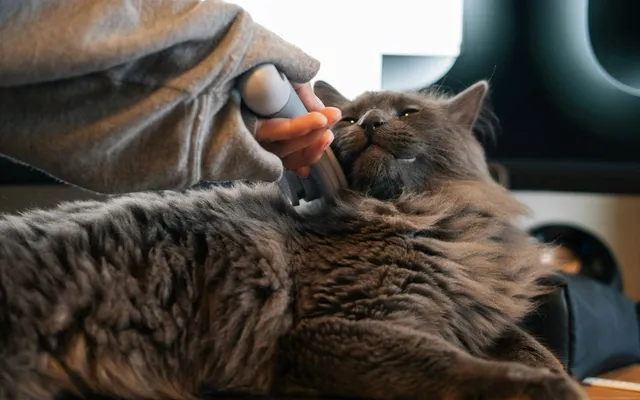
Struggling to brush a cat who won't sit still? Learn step-by-step techniques to make grooming easier, reduce stress, and build tolerance over time.
Cats spend a substantial share of their waking hours grooming themselves, and they are good at it. That makes it tempting to conclude they need nothing from you, which holds right up until it does not: long-haired cats cannot keep up with their own coat, overweight cats physically cannot reach large parts of their body, and older cats with stiff joints quietly stop trying.
A coat that starts looking greasy, clumped or slightly unkempt in a cat that used to be immaculate is worth noticing. It is one of the earlier visible signs that something has changed — pain, weight or illness — and it tends to appear before anything more obvious does.
Bathing a cat is, for the overwhelming majority of households, an unnecessary ordeal for both parties. A healthy cat with normal grooming behaviour keeps itself clean, and shampoo strips the skin oils it relies on. The genuine exceptions are narrow: contamination with something toxic or sticky, a medicated bath prescribed for a skin condition, a severely matted long-haired cat, or an elderly or obese cat that has stopped self-grooming.
If one of those applies, the how matters a great deal — water temperature, a non-slip surface, and keeping the whole thing short do more for the outcome than any product.
The hair a cat swallows while grooming normally passes through and leaves in the stool. Hairballs happen when more goes in than can pass, which is why they are commonest in long-haired cats and during heavy shedding periods. Brushing works because it removes loose hair before the cat can swallow it — it treats the cause rather than the symptom.
The part worth flagging: an occasional hairball is unremarkable, but frequent retching is not, and repeated unproductive retching with no hairball produced can mean an obstruction, which is an emergency. "Just a hairball" is a reasonable first assumption and a poor one to hold onto if it keeps happening.