Slow Feeder Bowls and Puzzle Feeders for Dogs
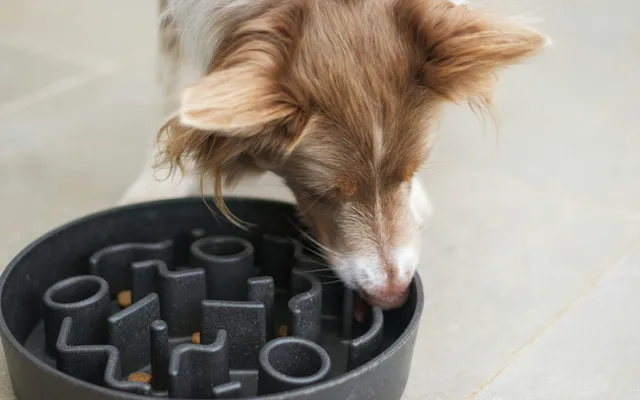
One slows a dog that inhales dinner in nine seconds. The other occupies a dog that's bored. They solve different problems, and buying the wrong one wastes money.
What to feed, what to skip, and how to read a dog food label — practical feeding guidance without the marketing spin.
One slows a dog that inhales dinner in nine seconds. The other occupies a dog that's bored. They solve different problems, and buying the wrong one wastes money.
Extra weight puts real strain on your dog's health. Learn how to safely help an overweight dog lose weight with vet-guided diet and exercise changes.
Want to share a bite with your dog safely? Discover which human foods are actually safe for dogs, in what amounts, and how to introduce them without upset.
Confused by dog food labels? Learn how to read ingredient lists, guaranteed analysis, and marketing claims so you can choose real quality over clever packaging.
Raw feeding and kibble both have passionate advocates. Compare the real benefits, risks, and evidence behind each to make an informed choice for your dog.
From chocolate to grapes and xylitol, learn which human foods are toxic to dogs, poisoning symptoms, and what to do if your dog eats something dangerous.
Pet food marketing runs on words that sound regulated and are not. "Premium", "holistic" and "natural" carry little or no legal definition in pet food. Meanwhile the statements that do mean something — the AAFCO nutritional adequacy statement, the guaranteed analysis, the ingredient list in descending order by weight before cooking — are printed small on the back in grey.
That last qualifier does a lot of work. An ingredient list can be arranged to put fresh meat first, because fresh meat is largely water and is weighed before it loses it. Split the same grain across three named fractions and each lands further down the list. None of this is fraud; it is simply why the ingredient panel rewards knowing how it is constructed.
Owners search "can dogs eat X" when they want to share something. The more useful reading is the other direction: knowing in advance which everyday foods are dangerous, because the moment that matters is the one where a dog has already helped itself. Grapes and raisins, xylitol, onions and garlic, and chocolate all sit in ordinary kitchens, and the toxic dose for some of them is small.
The permissive side is real too — plenty of human foods are perfectly safe to share, and using them as training rewards beats commercial treats on both cost and calorie control. The rule that keeps it sane: anything shared comes out of the daily calorie budget, not on top of it.
Owners spend a great deal of energy choosing between foods and comparatively little on how much of it goes in the bowl, which is backwards. A landmark lifetime study following Labradors found that dogs kept lean lived around two years longer than their overweight littermates, and developed age-related disease later. No brand switch produces an effect on that scale.
The practical difficulty is that overfeeding does not feel like overfeeding — it feels like a slightly generous scoop, a couple of biscuits, and someone else in the household also feeding the dog. That is why measuring beats estimating, and why the raw versus kibble debate, however heated, matters less than the portion size of whichever one you choose.