
What You Actually Need Before Bringing a Kitten Home
Most kitten checklists are shopping lists. This one separates what a kitten genuinely needs on day one from what the shop would like you to buy.
Justin Manuel Lantigua Germosen 8 min read
Kneading, litter box habits, biting during petting — decoding the everyday behaviors cat owners ask about most.
Most kitten checklists are shopping lists. This one separates what a kitten genuinely needs on day one from what the shop would like you to buy.
Cats are far less indifferent to an empty house than their reputation suggests. Here's what boredom and loneliness actually look like, and what genuinely helps.
That rhythmic paw-pushing behavior is called kneading. Learn why cats knead blankets and people, what it means, and when it's worth a closer look.
Introducing a new cat too quickly can cause lasting conflict. Follow this gradual, proven step-by-step process to help your cats (or cat and other pets) adjust.
Petting-induced biting is common and not aggression. Learn why cats overstimulate during petting, how to read their body language, and how to prevent bites.
A cat suddenly avoiding the litter box can signal a medical issue, stress, or a setup problem. Learn the causes and how to fix inappropriate urination.
This is the most important sentence in the section. A cat urinating outside the box is not making a point about your absence, your new partner or your choice of holiday. Urinary tract disease, crystals, kidney problems, diabetes and arthritis all produce exactly this behaviour — arthritis because a high-sided box becomes painful to climb into, which is invisible unless you think to look for it.
The behavioural causes are real, but they belong second in the queue. Litter type, box location, how many boxes there are relative to cats, and how recently something changed in the household all matter. The standard guideline is one box per cat plus one, in separate locations, which more households fail than meet.
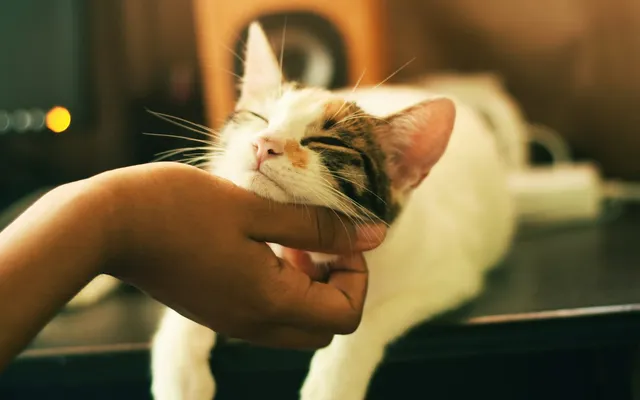
A cat rolls over, invites contact, enjoys it for two minutes, then bites the hand doing the petting. It reads as arbitrary. It usually is not: repetitive stroking builds up sensation until it tips from pleasant to irritating, and cats have a much lower threshold for that than dogs. The exposed belly, meanwhile, is a display of trust rather than an invitation — it is the most vulnerable part of the animal.
There is nearly always a warning, and it is easy to miss because it is small: the tail starts twitching, the skin along the back ripples, the ears rotate back, the body stiffens slightly. Stopping at that point rather than at the bite is what changes the pattern, and it teaches the cat that the signal works — which means it keeps using the signal instead of escalating.
The single most common mistake is putting two cats in a room together on day one to "let them sort it out". Cats are territorial in a way that sociable dogs are not, and a bad first impression is remarkably durable — a fight in week one can set a relationship that takes months to repair, if it repairs.
The alternative is slower and duller: complete separation at first, scent exchange before sight, visual contact through a barrier, and supervised time together only once nobody is reacting at the previous stage. It typically takes one to two weeks, sometimes longer, and rushing it is what turns a manageable introduction into two cats who spend years avoiding each other. Even the friendly behaviours are easier to read once a cat is settled.