
How to Choose a Cat Water Fountain
Most fountain complaints come down to four things: pump noise, filter cost, the material, and how easy it is to clean. Here's what to check before you buy.
 Justin Manuel Lantigua Germosen 7 min read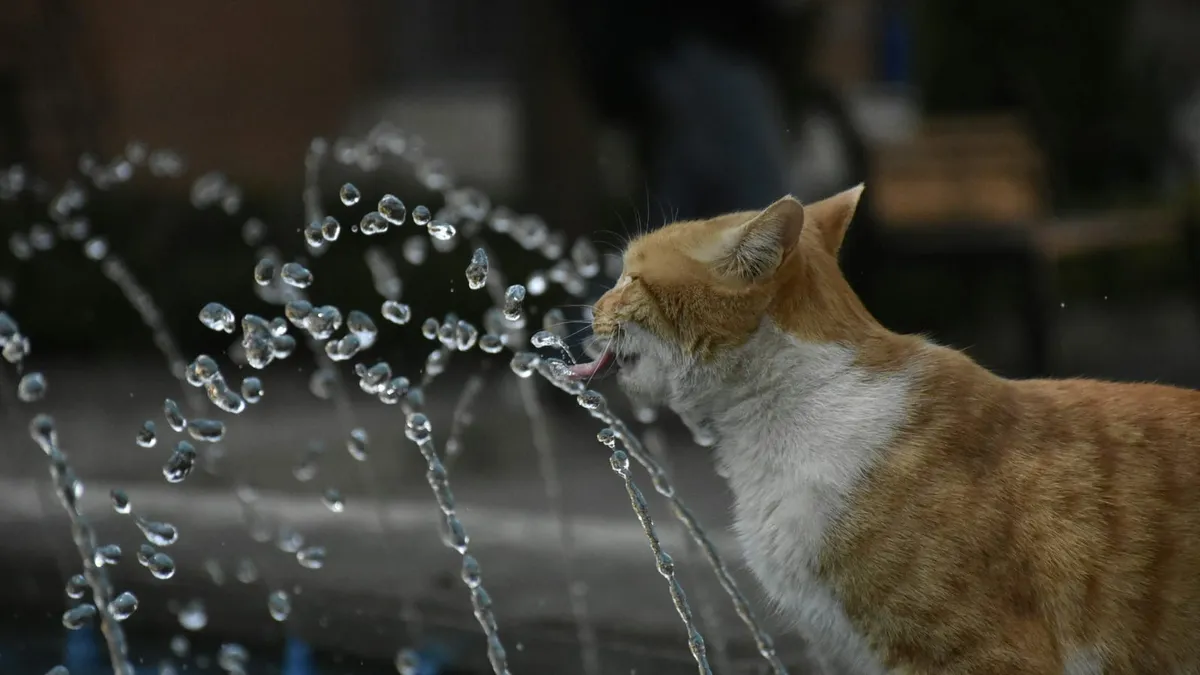
On this page
Cats are famously indifferent to their water bowl and famously interested in a running tap, which is the whole idea behind a fountain. Whether one helps your cat is genuinely uncertain until you try it. Whether the one you buy is a good fountain is much more predictable, because nearly every complaint owners have comes down to the same four things.
This guide is about those four. It’s a buying-criteria guide, not a hands-on test: we haven’t run a lab of fountains here, and any site that claims otherwise about twenty models is usually just rewriting the listings. What follows is what to check on the product page before you commit.
Key Takeaways
- Pump noise is the single most common reason a fountain ends up in a cupboard.
- Filters are the real running cost, and proprietary ones can cost more over two years than the fountain did.
- Plastic scratches, scratches hold bacteria, and plastic is linked to chin acne in some cats.
- If it can’t be taken apart easily, it won’t be cleaned often enough.
First: Is a Fountain the Right Answer?
Worth being clear about what a fountain is and isn’t for.
Cats descend from desert animals and get most of their water from food, which is why a cat on wet food may barely touch a bowl and be perfectly hydrated. A fountain can help a cat on dry food take in more water, and many cats do prefer moving water, but this varies by individual and some cats ignore it completely.
What a fountain is not is a response to a medical sign. If your cat has started drinking noticeably more than usual, that needs a vet and a blood test, not a purchase. Increased thirst is one of the first signs of kidney disease, diabetes and hyperthyroidism, and a fountain will hide the change rather than fix it.
Also worth knowing: switching some meals to wet food raises water intake far more reliably than any fountain, and our guide to wet food versus dry food covers that trade-off.
The Four Things That Decide Whether You Keep It
1. Pump Noise
This is the one that ends the relationship. A fountain runs twenty-four hours a day, often in a kitchen or hallway near where people sleep, and a pump that hums or rattles becomes intolerable within a week.
Two separate noises matter. The pump itself, which should be inaudible from a few feet away, and the water fall, which some cats like and some households don’t. A fountain running low on water also gets much louder, and that’s usually what people are hearing when they say theirs “started” being noisy.
What to look for: reviews that mention noise after several months rather than on day one, a pump that sits fully submerged, and a design where the water falls a short distance rather than a dramatic one.
2. Filter Cost Over Two Years
Almost every fountain uses replaceable carbon or foam filters, typically changed every two to four weeks. That’s the number nobody adds up before buying.
Do the arithmetic on the product page. A fountain at 25 € with filters at 12 € for a two-pack changed fortnightly costs around 180 € over two years. A fountain at 60 € with filters at 10 € for a six-pack costs around 100 € over the same period. The cheaper fountain is the more expensive purchase.
Check whether the filters are proprietary or a common size, and whether they’ve been discontinued in previous models, which is a real risk with small brands.
3. Material
Plastic is cheapest and the most common. It scratches with cleaning, and those micro-scratches hold bacteria and biofilm that no amount of rinsing removes. Plastic bowls are also associated with feline chin acne in some cats, where the chin develops blackheads and sometimes infected spots.
Ceramic is easy to keep genuinely clean, heavy enough not to be pushed around, and chips if dropped.
Stainless steel is the easiest to sanitise, usually dishwasher-safe, and can be noisier as water falls onto it.
For most households ceramic or steel is worth the extra, particularly if your cat has ever had chin acne.
4. How It Comes Apart
Look at the exploded diagram, not the marketing photo. You want to know how many parts there are, whether the pump opens without a tool, and whether the parts are dishwasher-safe.
This matters because of what grows where you can’t see. Biofilm develops inside the pump housing and the tubing within days, and a fountain that’s awkward to strip down gets a rinse instead of a clean. That is how a fountain ends up dirtier than the plain bowl it replaced.
A good sign: the manufacturer’s own instructions tell you to disassemble the pump weekly and show you how. A bad sign: cleaning instructions that say “rinse under the tap”.
Capacity: Bigger Isn’t Automatically Better
A larger reservoir means refilling less often, which sounds like a win. It also means water sitting longer, and for many owners a bigger tank quietly becomes an excuse to clean less.
Match capacity to household. One or two cats are fine with a small reservoir refreshed every couple of days. A larger tank makes sense for multiple cats or if you’re regularly out for long days, which is worth thinking about alongside keeping an indoor cat occupied when the house empties.
Whatever the size, top it up before it runs low. Running a pump dry damages it and is the most common reason a fountain fails early.
Practical Details Worth Checking
- Cord length and routing. It needs a socket near a sensible floor position. Some cats chew cables, so a short, tucked-away run is safer.
- Low-water indicator or auto shut-off. Protects the pump if you’re away for a day longer than planned.
- Multiple flow settings. Useful because cats vary in what they’ll approach.
- A wide, shallow drinking area. Cats dislike their whiskers touching the sides, and a narrow spout puts some cats off entirely.
- Stability. A light plastic fountain gets shoved across the floor by a determined cat.
Introducing It So It Actually Gets Used
Cats are suspicious of new objects, and a fountain is a new object that moves and makes noise. Don’t remove the old bowl.
Set the fountain up nearby, leave it running, and keep the normal water bowl available for at least a week or two. Cats investigate on their own schedule. Removing the familiar option to force the issue mostly produces a cat that drinks less, which is the opposite of the point.
Place it away from the food and away from the litter tray. Cats generally prefer their water somewhere separate from both, which is also why a cat may ignore a perfectly good bowl positioned next to the feeding station.
Frequently Asked Questions
Do cat water fountains actually make cats drink more? Many cats do drink more from moving water, and cats are poor drinkers by nature, so for some households a fountain makes a visible difference. It is not guaranteed for every cat, and it is not a treatment for a medical problem. A cat whose drinking has changed needs a vet before it needs a gadget.
How often do you have to clean a cat water fountain? Rinse and refill every couple of days, and take it fully apart for a proper clean weekly, including the pump. Biofilm builds up inside the pump housing and tubing where you can’t see it, and a neglected fountain is dirtier than a bowl you wash daily. If a design can’t be taken apart easily, it will not get cleaned often enough.
Are ceramic or stainless steel fountains better than plastic? For most households, yes, mainly because plastic scratches and those scratches hold bacteria. Plastic bowls are also associated with feline acne on the chin in some cats. Ceramic and stainless steel are easier to keep genuinely clean, though ceramic chips and both cost more.
What are the running costs of a cat fountain? Replacement filters are the real ongoing expense and are easy to overlook. Check the price and the recommended change interval before buying, because a cheap fountain with expensive proprietary filters costs more over two years than a pricier one with cheap filters. Electricity use is negligible.
The takeaway
Buy for the pump, the filters, the material and the disassembly, in that order. Those four decide whether the fountain is still running in six months or sitting in a cupboard. And keep the old bowl out alongside it for the first fortnight, because the fountain your cat won’t approach is worth nothing regardless of how well it’s built.
This article is for general informational purposes and is not a substitute for veterinary advice. A change in how much your cat drinks should be assessed by a veterinarian rather than managed with equipment.
Sources
Related articles
How to Help an Overweight Cat Lose Weight Safely
Cats cannot be crash-dieted. Cutting food too fast risks fatal liver failure, so feline weight loss is slow, measured and supervised. Here's how it's done.
Is My Cat Drinking More Water Than Normal?
A cat suddenly emptying the water bowl is one of the most useful early warnings you get. Here's how much is normal, how to measure it, and what it can mean.
Is Milk Bad for Cats? The Truth About Dairy
Cats and milk seem like a classic pairing, but most adult cats are lactose intolerant. Learn why milk upsets cats and what safe alternatives exist.