
Do Cats Get Lonely When You Go Back to Work?
Cats are far less indifferent to an empty house than their reputation suggests. Here's what boredom and loneliness actually look like, and what genuinely helps.
 Justin Manuel Lantigua Germosen 7 min read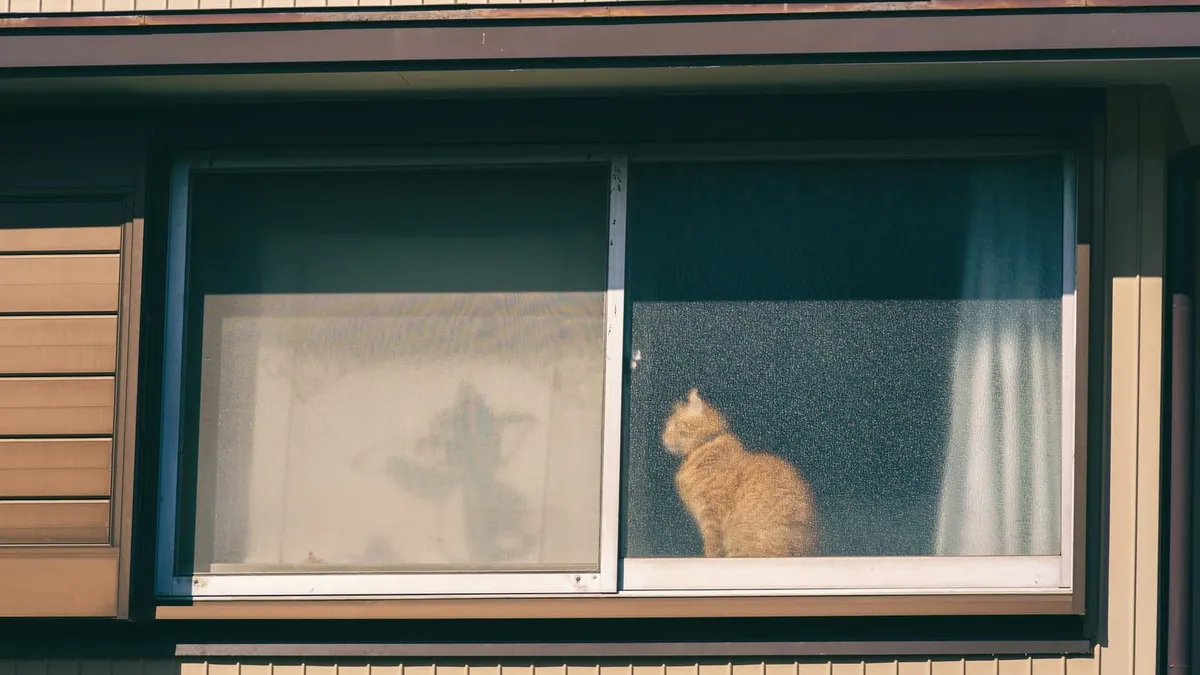
On this page
Cats have a reputation for not minding. They’re aloof, self-sufficient, faintly contemptuous of our comings and goings. That reputation does a lot of quiet damage every September, when a house that has been busy all summer empties out at eight in the morning.
The reality is less flattering to the stereotype. Cats form genuine attachments to the people they live with, and research on feline attachment has found broadly the same patterns seen in dogs and in young children. They are better than dogs at tolerating quiet. That isn’t the same thing as not noticing.
Key Takeaways
- Cats do form real attachments. Independence is not indifference.
- Loneliness and boredom in cats usually show up as changed behavior rather than obvious distress: over-grooming, night waking, litter box changes.
- Almost every sign on that list can also be a medical problem, so the vet comes before the behavior plan.
- Enrichment that works is mostly about vertical space, hunting-shaped feeding, and a view. It isn’t about more toys in a basket.
Why the Stereotype Is Misleading
The independence cats are known for is real, and it comes from their history. A solitary hunter that domesticated itself around human grain stores doesn’t need a pack the way a dog does. A cat left alone for a working day is not experiencing what a dog experiences.
But cats are strongly attached to territory and to routine, and a household schedule is part of both. When the pattern of a day changes, when meals move, when the person who was always on the sofa isn’t, when the house goes from noisy to silent for seven hours, that registers. It tends to register as a change in behavior rather than as anything a person would read as sadness, which is exactly why it gets missed.
Indoor-only cats feel this most sharply, because the household is the whole territory. There is no garden to patrol as an alternative to an empty living room.
What Loneliness and Boredom Actually Look Like
Over-Grooming
A bored or stressed cat may groom compulsively, sometimes to the point of thin patches or bald areas, most often on the belly, inner thighs or forelegs. It is self-soothing behavior, and it also means more fur swallowed. A rise in hairballs can be an early hint before you see any coat damage.
Waking You at Night
A cat who has slept through the day in an empty house has energy to spend, and the small hours are when they spend it. Night activity that starts in the same fortnight as a schedule change is rarely coincidence.
Litter Box Changes
Stress is a well-recognized contributor to urination outside the box, and also to feline lower urinary tract disease. This is the sign that most needs a vet first, because a urinary tract problem can look identical from the outside and is genuinely urgent in male cats.
Appetite Changes in Either Direction
Boredom eating is a real contributor to weight gain in indoor cats. In the other direction, a cat who stops eating is always a concern. Cats who don’t eat for a couple of days can develop serious liver problems, and that’s a same-week vet visit, not something to watch.
Over-Attachment and Redirected Biting
Some cats become notably clingy when their people are home, following from room to room. Some start biting during petting, an over-stimulated response from an animal that has gone from nothing to a great deal of attention in the space of a minute.
The Vet Comes First
Every sign above has a medical explanation that looks the same from the outside. Over-grooming is at least as often allergies, fleas or pain as it is stress. Night vocalizing in an older cat can be hyperthyroidism or cognitive decline. Appetite changes are the opening symptom of a long list of conditions.
Treating a medical problem as a behavior problem loses weeks, and in a cat weeks matter. Cats conceal illness well enough that the visible signs often arrive late. If your cat’s behavior has changed, the sequence is vet first, enrichment plan second.
What Actually Helps
Build Upward, Not Outward
Floor space matters less to a cat than vertical space. Cat trees, shelves, the top of a wardrobe cleared off: height gives a cat somewhere to survey from and somewhere to retreat to, and it multiplies the usable territory in a small flat without moving a wall.
Give Them a Window
A window seat with a view of a garden, a bird feeder or even a street is the single cheapest enrichment there is. It supplies several hours of the low-grade watching that cats do naturally. A secure perch at sill height is often all it takes.
Feed Like a Hunt
Cats evolved to eat many small meals they had to work for. A bowl of kibble delivered in one go satisfies the calories and none of the behavior. Puzzle feeders, treat balls and food hidden in a few places around the house turn feeding into something that takes time and attention.
Do it with part of the normal daily ration instead of extra food. Our cat food calculator gives the daily figure to divide up, and our guide to how much to feed a cat covers portioning in more detail.
Play at the Right End of the Day
Ten to fifteen minutes of wand-toy play that ends in a catch and then a meal follows the hunt-eat-groom-sleep sequence cats are built around. Done in the evening, it also takes the edge off the three-in-the-morning energy.
Rotate, Don’t Accumulate
Cats habituate to toys quickly. Six toys left out permanently become scenery. The same six, in two groups swapped weekly, stay interesting, which costs nothing and works better.
Leave the Radio On, Modestly
Low background sound helps some cats, mostly by making an empty house less silent. It is a small adjustment with a small effect, and worth doing because it’s free.
Should You Get a Second Cat?
This is the most common suggestion and the least reliable one. Cats are territorial in a way dogs are not, and an unwanted housemate is not company. It’s a permanent stressor sharing the litter box.
It is more likely to go well with a young, sociable cat, with a slow and structured introduction, and with enough separate resources, meaning litter trays, food stations and high perches, that neither cat has to compete. It is a poor bet for an older cat who has spent a decade as an only cat. If you’re considering it, our guide to introducing a new cat to your home covers doing it properly, and some breeds, Ragdolls and Maine Coons among them, tend to accept other cats more readily than most.
Frequently Asked Questions
Do cats actually get lonely, or is that just projection? Cats form real attachments to their people, and research on feline attachment has found patterns much like those seen in dogs and young children. They are more independent than dogs in day-to-day terms and cope better with quiet, but independent is not the same as indifferent. A cat who has had company all summer notices when it stops.
What are the signs my cat is bored or under-stimulated? Over-grooming to the point of thin patches, waking you repeatedly at night, sudden bursts of frantic activity, redirected biting during petting, over-eating from boredom, and litter box changes are the common ones. None of these is exclusive to boredom, which is why a vet visit comes before a behavior plan.
Should I get a second cat to keep mine company? Sometimes it helps and sometimes it makes things considerably worse. Cats are territorial, and an unwanted housemate is a permanent stressor rather than a solution. It is more likely to work with young, sociable cats and a slow, structured introduction. It is a poor bet for an older cat who has never lived with another.
Is it better to leave a cat with free access to food while I’m at work? Free-feeding dry food is convenient but makes portion control much harder, and boredom eating is a real contributor to feline obesity in indoor cats. Measured meals, ideally with some of the ration delivered through puzzle feeders, feed the cat and occupy them at the same time.
The takeaway
The idea that cats don’t care whether you’re there is comfortable and mostly wrong. They cope with an empty house better than dogs do, and they still notice when a summer of company ends. What they need in return isn’t constant attention but a territory worth occupying: height to climb, a window to watch, food that takes effort to get, and a short, reliable burst of play at the end of the day. And because almost everything that looks like loneliness in a cat can also be illness, the first move when behavior changes is always the vet, not the pet shop.
This article is for general informational purposes and is not a substitute for veterinary advice. Any sudden change in your cat’s grooming, appetite, litter box habits or activity warrants a veterinary examination.
Sources
Related articles
What You Actually Need Before Bringing a Kitten Home
Most kitten checklists are shopping lists. This one separates what a kitten genuinely needs on day one from what the shop would like you to buy.
Why Do Cats Knead? Understanding This Common Behavior
That rhythmic paw-pushing behavior is called kneading. Learn why cats knead blankets and people, what it means, and when it's worth a closer look.

Introducing a New Cat to Your Home: A Step-by-Step Guide
Introducing a new cat too quickly can cause lasting conflict. Follow this gradual, proven step-by-step process to help your cats (or cat and other pets) adjust.