
Cat Dandruff and Dry Skin: Causes and What Helps
White flakes along a cat's back are rarely just dry air. Here's what actually causes feline dandruff, including the causes that have nothing to do with skin.
 Justin Manuel Lantigua Germosen 8 min read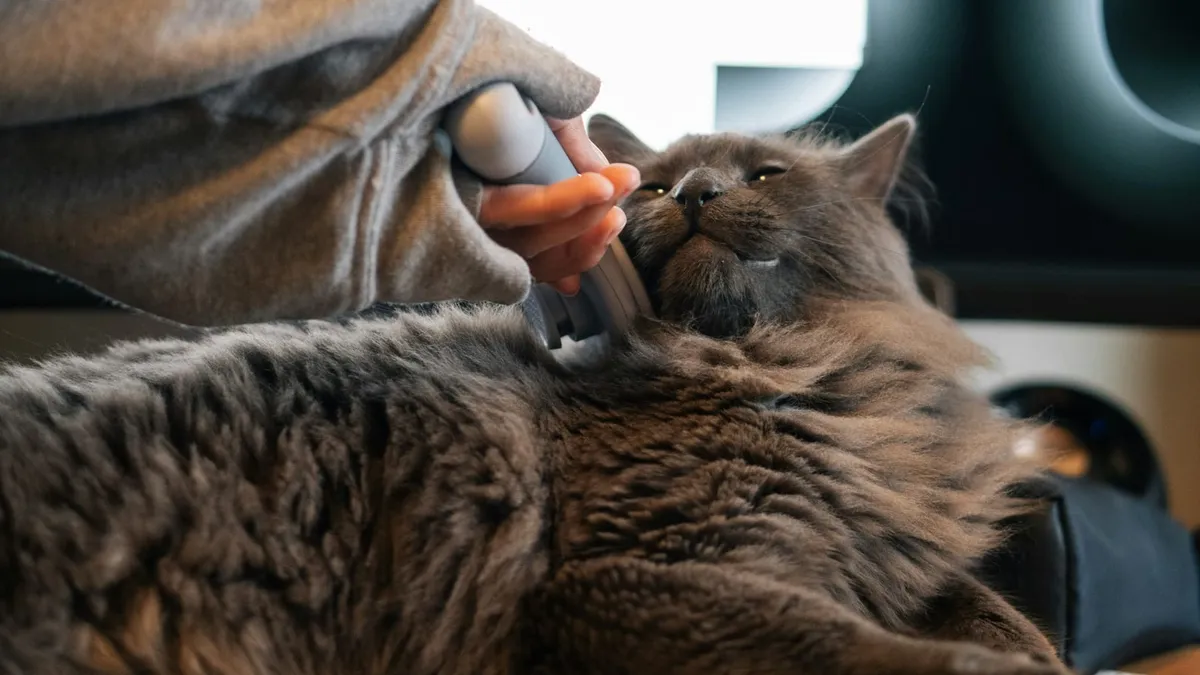
On this page
Dandruff in cats tends to get treated as a cosmetic problem, and quite often it isn’t one. The single most common reason an adult cat develops flakes along their back is that they have stopped grooming that area, and the reasons a cat stops grooming are usually worth knowing about.
Cats spend a large part of their waking lives grooming. It removes dead skin and distributes the oils that keep the coat in condition. When flakes appear, the useful question isn’t which shampoo to buy. It’s what changed.
Key Takeaways
- Where the flakes are matters. Along the lower back and tail base usually means the cat can’t reach, not that the skin is dry.
- Obesity, arthritis and dental pain are the three most common reasons a cat stops grooming properly.
- Dandruff plus weight loss, increased thirst or a greasy coat is a reason to see a vet, not to buy a product.
- Mites that cause “walking dandruff” are contagious and need veterinary treatment.
Where the Flakes Are Tells You Most
Before anything else, look at the distribution.
Lower back, rump and base of the tail. This is the area a cat reaches last and gives up on first. Flakes concentrated here, often with a slightly greasy or clumped coat, point to a cat who physically can’t twist round comfortably any more. In practice that means weight, joints or pain.
Everywhere, evenly. More likely to be environmental, dietary, or a general skin condition.
Patchy, with redness or scabs, and an itchy cat. That’s a skin problem rather than a grooming problem, and it needs a diagnosis. Parasites and allergies both live here.
Flakes that appear to move. Take this seriously. See the mites section below.
The Reasons a Cat Stops Grooming
Weight
An overweight cat simply cannot reach the middle of their own back. It’s a mechanical problem, and it’s the most common cause of a scurfy lower back in an otherwise healthy adult cat. The flakes are the visible symptom of a body condition issue, and they usually improve as the cat does.
Indoor cats fed free-choice dry food are the classic case, and boredom eating contributes when the household is out all day. Our guide to how much to feed a cat covers portioning, and the cat food calculator gives a daily figure to work from.
Arthritis
Arthritis is badly under-diagnosed in cats, partly because cats don’t limp in the obvious way dogs do. They stop jumping onto things, they sleep in different places, they get grumpy about being handled, and they stop grooming the parts that require twisting. A senior cat with a scurfy back and a sudden dislike of being brushed is a candidate.
This one is worth raising specifically with your vet, because pain relief for feline arthritis has improved considerably and cats on effective treatment often start grooming again.
Dental Pain
Grooming is done with the mouth. A cat with painful teeth or inflamed gums grooms less, and often drops the more effortful areas first. Reduced grooming alongside dropping food, chewing on one side, or bad breath points here.
The Other Causes
Dry Indoor Air
Central heating drops indoor humidity sharply, and a lot of cats develop mild flaking every autumn as a result. This is real, though it’s more often a contributor than the whole answer. If the dandruff arrives the same week the heating goes on and the cat is otherwise well and grooming normally, it’s a reasonable explanation.
Diet
Skin and coat need adequate protein and essential fatty acids. A complete, life-stage-appropriate food generally supplies both. Very low-fat diets, unbalanced home-prepared food, or a food the cat isn’t eating much of can all show up in the coat within a few weeks.
Not Enough Water
A cat on dry food who drinks little can be running mildly dehydrated, and skin shows it. This is also worth watching for the opposite reason: a cat who has started drinking noticeably more may have a condition that affects the coat too.
Parasites
Fleas cause dandruff-like debris and, more importantly, flea allergy dermatitis in sensitive cats. Check for flea dirt by combing onto damp white paper, where it shows as dark specks that smear reddish-brown. Indoor-only cats get fleas too.
Allergies
Environmental and food allergies produce itching, over-grooming, scabbing and flaking. An itchy cat with dandruff is a different problem from a comfortable cat with dandruff.
Underlying Illness
Hyperthyroidism, diabetes and kidney disease all commonly show up in the coat, often before an owner notices anything else. A cat whose coat has deteriorated and who has also lost weight, drunk more, or generally stopped caring for themselves needs blood tests rather than grooming advice.
Walking Dandruff
Cheyletiella is a surface-living mite big enough that the scurf appears to shift when you watch it closely, which is how it got the name. It produces heavy scurf, usually along the back, and often an itchy cat.
It’s contagious to other cats and dogs, and it can cause an itchy rash on people who handle the animal. It needs proper veterinary treatment, and no amount of conditioning shampoo will touch it. If the dandruff is heavy, the cat is itchy, or another pet or a person in the house has developed a rash, this belongs on the list.
What Actually Helps
Brushing
The most useful thing you can do for most cats, because it does mechanically what the cat has stopped doing. It lifts dead skin, spreads oils, and gives you a weekly look at the skin underneath.
Go gently over the lower back, which may be sore if arthritis is involved. Short sessions beat long ones. For cats who object, our guide to grooming a cat that hates brushing covers building tolerance, and longhaired breeds like Persians and Maine Coons need it as routine rather than as a response to a problem.
Brushing also reduces swallowed fur, which helps with hairballs.
Omega-3 Fatty Acids
Supplements containing EPA and DHA can improve skin and coat condition. Use a product formulated for cats at the dose on the label, and check with your vet first if your cat is on any medication or has a health condition. Fish oil intended for people is not a good substitute.
Humidity
If the flakes track the heating season, a humidifier in the room the cat sleeps in is a cheap thing to try.
Water
Wet food raises total water intake substantially and is a reasonable adjustment for a dry-food cat with a dull coat. Water fountains suit cats who prefer moving water.
Bathing, Rarely
Most cats don’t need bathing, and it’s stressful for both parties. Where a vet recommends a medicated shampoo for a specific diagnosis, that’s different. Our guide to how often to bathe a cat covers when it’s genuinely warranted.
When to See a Vet
- Dandruff with itching, scabs, redness or hair loss
- Flakes that appear to move, or an itchy rash on a person in the household
- Coat changes alongside weight loss, increased thirst or appetite changes
- A cat who has broadly stopped grooming
- A senior cat who has become reluctant to jump or be handled
- Dandruff that doesn’t improve after several weeks of regular brushing
Frequently Asked Questions
Why does my cat suddenly have dandruff? The most common reason in an adult cat is that they have stopped grooming a part of themselves properly, and the usual causes of that are obesity, arthritis or dental pain. Dry indoor air, diet, parasites, allergies and underlying illness all contribute too. Flakes concentrated near the base of the tail and along the lower back point strongly toward a cat who cannot comfortably reach there.
Is cat dandruff a sign of something serious? It can be. Dandruff alongside weight loss, increased thirst, a greasy or matted coat, or a cat who has generally stopped grooming warrants a veterinary examination, because hyperthyroidism, diabetes and kidney disease all show up in the coat. Dandruff on its own in an otherwise bright, well cat is usually more mundane.
What are walking dandruff mites? Cheyletiella is a surface mite whose large size and movement makes the scurf appear to move, which is where the name comes from. It is contagious between pets, can cause an itchy rash on people, and needs veterinary treatment rather than a moisturising shampoo. Any dandruff that appears alongside itching or spreads to other pets should be checked.
Can I put coconut oil or olive oil on my cat’s dandruff? It is not a good idea. Oil on the coat gets groomed off and swallowed, which can cause stomach upset and adds calories, and a greasy coat traps debris. If you want to support skin from the inside, an omega-3 supplement formulated for cats is the better route, and worth discussing with your vet first, especially for a cat on medication.
The takeaway
Feline dandruff is worth reading as information rather than treating as a blemish. Flakes along the lower back of a middle-aged cat usually mean they can’t reach, and the reason they can’t reach is the thing to address. Brushing helps almost every case and costs nothing. What it won’t do is fix arthritis, sort out a thyroid, or clear mites, so if the coat doesn’t respond within a few weeks, or anything else about the cat has changed, that’s the point to get them looked at.
This article is for general informational purposes and is not a substitute for veterinary advice. Coat changes accompanied by weight loss, increased thirst, itching or reduced grooming should be assessed by a veterinarian.
Sources
Related articles
How Often Should You Bathe a Cat? A Complete Guide
Most cats rarely need baths thanks to self-grooming, but some situations call for it. Learn how often to bathe a cat and how to do it safely and calmly.
Hairballs in Cats: Causes, Prevention, and When to Worry
Hairballs are common in cats, but frequent ones may signal a problem. Learn what causes hairballs, how to prevent them, and when they need a vet's attention.
How to Trim a Cat's Nails Without Getting Scratched
Trimming a cat's nails doesn't have to be a fight. Learn a calm, step-by-step approach to cat nail trims, the right tools, and what to do if you nick the quick.