
How Often Should You Bathe a Cat? A Complete Guide
Most cats rarely need baths thanks to self-grooming, but some situations call for it. Learn how often to bathe a cat and how to do it safely and calmly.

On this page
Unlike dogs, most cats are largely self-sufficient when it comes to staying clean, thanks to their remarkably effective self-grooming habits. That doesn’t mean baths are never necessary, but for most cats, they’re an occasional need rather than a regular routine.
Key Takeaways
- Most healthy cats don’t need regular baths, since their tongue-and-saliva grooming routine keeps their coat clean.
- Baths become useful in specific situations: getting into something sticky or toxic, mobility issues that limit self-grooming, certain skin conditions, or specific breed needs.
- When bathing is necessary, use lukewarm water, a cat-specific shampoo, and a calm, gradual approach.
- Long-haired cats and senior or overweight cats may need more grooming assistance, including occasional baths.
Do Cats Actually Need Baths?
For most healthy, short-haired cats, the answer is rarely. Cats spend a significant portion of their day grooming themselves, and their rough, backward-facing tongue papillae are remarkably effective at removing dirt, loose hair, and distributing natural oils through their coat.
When a Bath Actually Makes Sense
Your Cat Gets Into Something Sticky, Greasy, or Toxic
If a cat gets a substance on their fur that could be harmful if ingested during self-grooming (such as certain chemicals, paint, or oil), a bath is important to prevent them from licking it off and getting sick.
Long-Haired Breeds With Matting Issues
Breeds with long, dense coats, such as Persians or Maine Coons, may need more grooming assistance overall, including occasional baths in addition to regular brushing, to help manage matting and coat health.
Senior Cats or Cats With Mobility Issues
Cats with arthritis, obesity, or other mobility limitations may struggle to reach and groom certain parts of their body effectively, making occasional bathing assistance helpful for maintaining hygiene.
Specific Skin Conditions
Some veterinary-recommended treatments for skin conditions, parasites, or allergies involve medicated shampoos, which your vet may recommend using at a specific frequency as part of a treatment plan.
Excessive Shedding or Dander Concerns
Some owners bathe cats occasionally to help manage shedding or reduce allergen levels in the home, though this is optional rather than a health necessity for most cats.
How to Bathe a Cat Safely
Step 1: Prepare Everything in Advance
Have towels, cat-specific shampoo, a non-slip mat for the sink or tub, and a cup or handheld sprayer ready before bringing your cat to the bathing area, so the process moves quickly once started.
Step 2: Brush Your Cat First
Removing loose fur and any tangles beforehand makes the bathing process faster and prevents mats from tightening when wet.
Step 3: Use Lukewarm Water
Fill the basin with just a few inches of lukewarm water, or use a handheld sprayer at a gentle, low-pressure setting, avoiding your cat’s face and ears.
Step 4: Use Cat-Specific Shampoo Only
Never use human shampoo or dog shampoo on a cat, as their skin pH and sensitivity differ significantly, and some ingredients safe for humans or dogs can be harmful to cats.
Step 5: Work Quickly and Calmly
Gently wet and lather your cat’s body, avoiding the face, and rinse thoroughly, since leftover shampoo residue can irritate the skin. Speak calmly throughout to help reduce stress.
Step 6: Dry Thoroughly
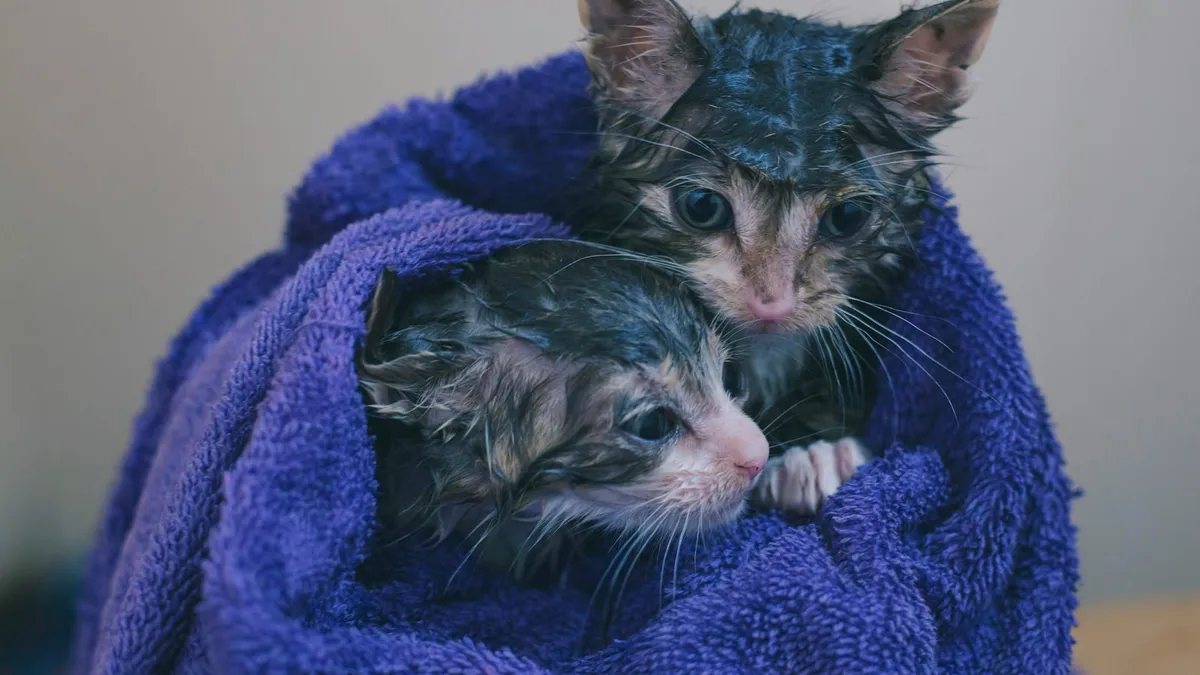
Wrap your cat in a towel immediately and dry as much as possible. Most cats tolerate towel drying far better than a blow dryer, though if you do use one, keep it on the lowest heat and noise setting, at a safe distance.
Step 7: Reward and Reassure
Offer treats, praise, or a favorite toy afterward to help build a more positive association with the experience over time.
Tips for Making Bath Time Less Stressful
- Trim your cat’s nails beforehand to reduce the risk of scratches during a stressful moment
- Use a rubber mat in the sink or tub so your cat has secure footing rather than a slippery surface
- Enlist a second person to help hold and calm your cat if needed, especially for a first-time bath
- Keep the bathroom door closed to prevent a wet, startled cat from bolting through the house
- Consider a professional groomer for cats who are particularly bath-averse or for breeds with more complex coat maintenance needs
Alternatives to a Full Bath
For cats who tolerate baths poorly but need occasional spot cleaning, waterless cat shampoo or pet-safe grooming wipes can help address localized dirt or odor without a full bath. Regular brushing also goes a long way toward reducing the need for baths in the first place.
Frequently Asked Questions
How often should indoor cats be bathed? Most healthy indoor cats don’t need regular baths at all, thanks to their self-grooming habits. Bathing is typically reserved for specific situations like exposure to something sticky or toxic, certain skin conditions, or breed-specific coat needs.
Can I bathe my cat too often? Yes, bathing too frequently can strip natural oils from a cat’s skin and coat, potentially leading to dryness or irritation. Bathing should generally be occasional and purposeful rather than a routine habit for most cats.
What shampoo is safe to use on a cat? Only use shampoo specifically formulated for cats. Human shampoo and dog shampoo can be too harsh or contain ingredients unsuitable for a cat’s skin and grooming habits.
My cat hates water. Is there another way to keep them clean? Regular brushing, waterless cat shampoo, and pet-safe grooming wipes can help manage cleanliness for cats who strongly resist water, reserving full baths only for situations that truly require them.
The takeaway
Most cats are excellent self-groomers and rarely need baths, but certain situations, like sticky messes, mobility limitations, or specific skin conditions, do call for one. When bathing is necessary, a calm approach, cat-specific products, and thorough drying make the experience as smooth as possible for both of you.
This article is for general informational purposes. Consult your veterinarian or a professional groomer for guidance specific to your cat.
Sources
Related articles

Hairballs in Cats: Causes, Prevention, and When to Worry
Hairballs are common in cats, but frequent ones may signal a problem. Learn what causes hairballs, how to prevent them, and when they need a vet's attention.

How to Trim a Cat's Nails Without Getting Scratched
Trimming a cat's nails doesn't have to be a fight. Learn a calm, step-by-step approach to cat nail trims, the right tools, and what to do if you nick the quick.
Cat Dandruff and Dry Skin: Causes and What Helps
White flakes along a cat's back are rarely just dry air. Here's what actually causes feline dandruff, including the causes that have nothing to do with skin.