Kiki the sheep can't walk — so she drives her own motorized wheelchair
Born unable to use her legs, Kiki the sheep now steers a custom motorized cart with her head — and is changing how people see disabled animals.

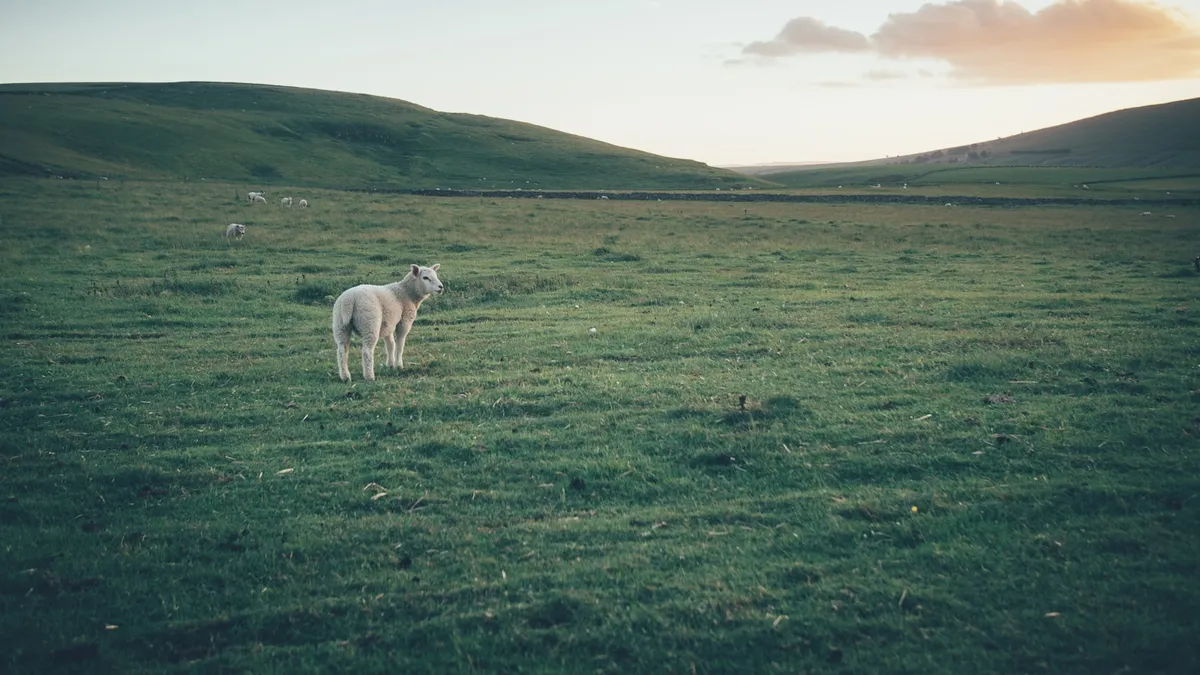
Most sheep spend their lives following the flock. Kiki prefers to drive. Tilting a joystick with her head, she zips across her sanctuary yard in a custom motorized cart — turning, reversing, and, her caregivers swear, occasionally bobbing along to music.
She has become an unlikely social-media star. She has also become something more useful: a living example of just how much is possible when we refuse to give up on disabled animals.
A lamb who was never supposed to walk
Kiki was born unable to use her legs — the result of Cache Valley virus, a mosquito-borne infection that can cause severe limb and joint deformities in lambs when a ewe is infected during pregnancy. Unable to stand and rejected by her mother, she faced the odds that most such lambs never survive.
Instead, she was taken in as a tiny, days-old lamb by Don’t Forget Us, Pet Us, an animal sanctuary in North Dartmouth, Massachusetts, led by Deb Devlin. In her earliest days, Kiki was fitted with a support wheelchair and lifting harnesses to keep her upright, build strength, and begin physical therapy.
The cart that changed everything
The real breakthrough came when her caregivers adapted a motorized cart for her, with a joystick positioned so she could operate it with her head. Rather than being pushed, Kiki could finally decide for herself where she wanted to go — forward, backward, left, right.
She took to it with gusto. Videos show her cruising the sanctuary grounds under her own power, sometimes herding her fellow rescue animals along with her. Her caregivers affectionately call the cart her “Lamborghini,” and say she uses it not just to get around but to play — nudging at a radio and swaying to the music.
Today, Kiki serves as an ambassador for the sanctuary, visiting schools to introduce children to a simple idea: a disability is not the end of a full, joyful life. Her story has rippled outward, inspiring adapted mobility devices for other animals in need.
What Kiki teaches about caring for disabled animals
Behind the charm is a genuinely useful lesson. A generation ago, an animal born like Kiki would almost never have been given a chance. Today, thoughtful care can give many disabled animals full and happy lives — and the tools exist to help.
If you ever find yourself caring for a mobility-impaired pet, here’s what Kiki’s story highlights:
- Mobility aids are real medicine. Purpose-built carts and wheelchairs (from makers such as Walkin’ Pets), slings and lifting harnesses can restore independence, protect joints, and support rehabilitation — the same category of assistive devices vets recommend for dogs coping with conditions like arthritis.
- Daily care matters as much as the gear. Animals that can’t move freely need attentive management of pressure sores, skin, bladder and bowel function, and weight — small routines that prevent big problems.
- Enrichment is not optional. As Kiki proves, independence and play are central to wellbeing, not extras.
- Sanctuaries carry the load. Small, donation-funded rescues do extraordinary work with special-needs animals. Supporting a reputable one — or simply never abandoning an animal because it’s “imperfect” — is how stories like Kiki’s become possible, the same spirit behind giving rescue dogs with a known history a chance instead of only seeking out a specific breed.
The takeaway
Kiki can’t walk, and it has barely slowed her down. Her joystick-driven victory laps are adorable, but the real headline is quieter and more hopeful: with a little ingenuity and a lot of compassion, “unable to” can become “watch me.”