
Why Do Cats Knead? Understanding This Common Behavior
That rhythmic paw-pushing behavior is called kneading. Learn why cats knead blankets and people, what it means, and when it's worth a closer look.

On this page
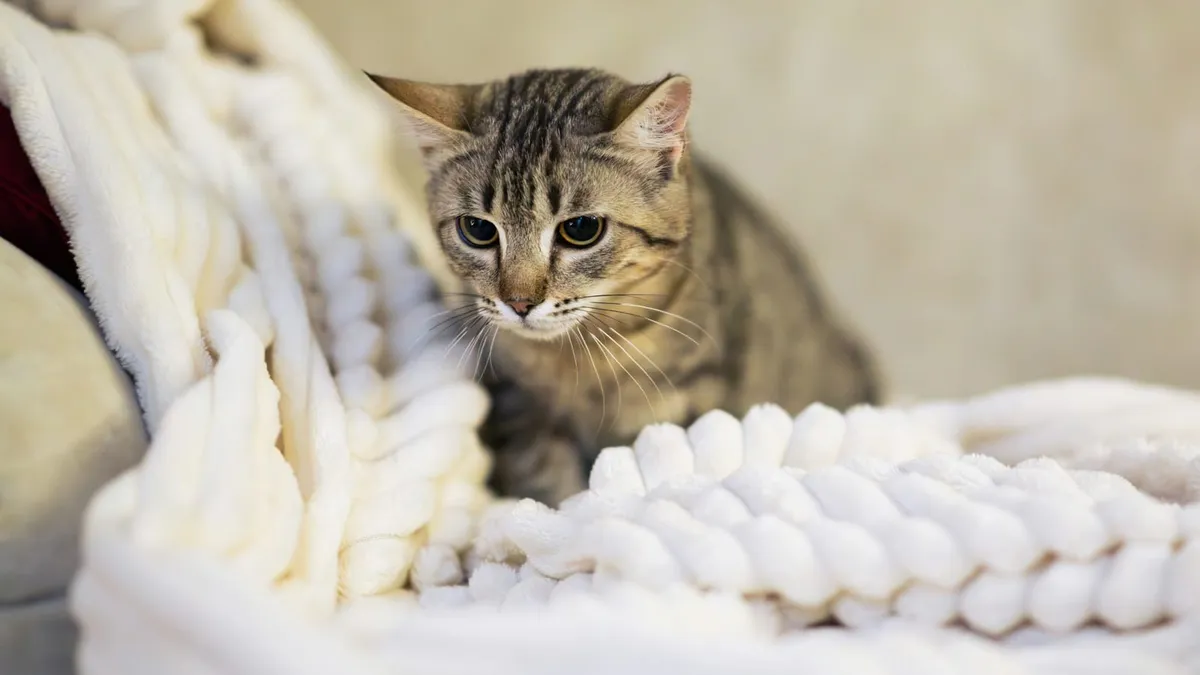
If your cat rhythmically pushes their paws in and out against a blanket, your lap, or a soft toy, sometimes purring contentedly while doing it, you’ve witnessed kneading, often affectionately called “making biscuits.” It’s one of the most recognizable and endearing cat behaviors, and it has roots that trace all the way back to kittenhood.
Key Takeaways
- Kneading likely originates from nursing behavior kittens use to stimulate milk flow from their mother.
- Adult cats often continue kneading as a sign of comfort, contentment, or affection.
- Kneading is usually completely normal, though occasional context (like excessive intensity or sudden new onset in an older cat) is worth noting.
- Providing a soft, appropriate surface for kneading is a simple way to support this natural behavior.
What Is Kneading?
Kneading refers to the rhythmic pushing motion cats make with their front paws, alternating left and right, often against a soft surface like a blanket, cushion, or a person’s lap. It’s frequently accompanied by purring, and some cats knead with their claws out, which can occasionally surprise (or lightly scratch) unsuspecting owners.
Why Do Cats Knead? The Nursing Theory
The most widely accepted explanation traces kneading back to kittenhood. Nursing kittens instinctively knead against their mother’s belly to help stimulate milk flow. This rhythmic motion becomes deeply associated with comfort, safety, and nourishment early in life. Many cats simply continue this behavior into adulthood, particularly in moments when they feel relaxed, safe, and content, essentially recreating that early sense of comfort.
Other Possible Reasons Cats Knead
Marking Territory
Cats have scent glands in their paw pads, and kneading may help deposit their scent onto a surface, marking it as familiar and their own — a much milder version of the territorial marking some cats display through urine spraying.
Preparing a Resting Spot
In the wild, this behavior may have helped cats flatten grass or foliage to create a more comfortable spot to rest, an instinct that persists even though most house cats no longer need to prepare their own bedding.
Expressing Contentment
Many owners notice their cats knead most often right before settling in to nap, or while being petted in a way they enjoy, suggesting it’s strongly tied to feelings of relaxation and comfort.
Affection Toward Their Owner
When a cat kneads on a person’s lap, it’s often interpreted as a sign of trust and affection, essentially treating the owner similarly to how they related to their mother during nursing, though that same physical closeness can sometimes tip into overstimulation if petting continues too long.
Is Kneading Ever a Cause for Concern?
Kneading itself is a completely normal, healthy behavior in the vast majority of cases. That said, a few situations are worth paying attention to:
- Sudden onset of new, unusual behaviors alongside kneading (like excessive vocalizing or restlessness) could indicate an unrelated issue worth mentioning to your vet
- Kneading paired with signs of pain, such as flinching or reluctance to be touched, which is uncommon but worth a vet visit if observed
- Excessive, compulsive-seeming kneading far beyond typical patterns, in rare cases associated with anxiety, though this is far less common than typical comfort-related kneading
In the overwhelming majority of cases, kneading alone is simply a sign of a comfortable, content cat.
How to Make Kneading More Comfortable for Everyone
Provide a Soft Surface
A blanket or cushion nearby gives your cat an appropriate outlet for kneading, especially useful if you’d rather they not knead directly on your lap with claws out.
Trim Your Cat’s Nails Regularly
If kneading on your lap is uncomfortable due to claws, regular nail trims can help reduce the pinch without discouraging the behavior itself.
Use a Lap Blanket
Keeping a dedicated blanket on your lap during cuddle time gives your cat a cushioned surface to knead without direct claw contact with your skin.
Avoid Punishing the Behavior
Since kneading is a natural, instinctive behavior tied to comfort and positive associations, punishing it can create unnecessary stress for your cat without actually stopping the underlying urge.
Do All Cats Knead?
Not every cat kneads with the same frequency or intensity, and some cats knead rarely or barely at all. This variation is normal and doesn’t indicate anything is wrong; like many behaviors, kneading varies by individual personality and past experiences.
Frequently Asked Questions
Why does my cat knead and then bite the blanket? This is often just an extension of the same nursing-related comfort behavior, sometimes combined with a cat’s natural instinct to “test” or mouth soft textures. It’s usually harmless unless your cat is ingesting fabric, which would be worth mentioning to your vet.
Why does my cat only knead certain blankets or objects? Cats often develop preferences for specific textures that feel most satisfying to knead, similar to how people might prefer certain fabrics. This is a normal individual preference.
Is it bad that my cat kneads with her claws out? Not inherently, though it can be uncomfortable if you’re the surface being kneaded. Regular nail trims and offering a blanket as a buffer can make this more comfortable without discouraging the natural behavior.
Do male and female cats knead differently? There’s no strong evidence that kneading behavior differs meaningfully by sex; it’s more closely tied to individual temperament and early life experiences than gender.
The short version
Kneading is one of the most charming and well-understood cat behaviors, rooted in early nursing instincts and closely associated with comfort and contentment in adulthood. In nearly all cases, a kneading cat is simply a relaxed, happy cat, and providing a soft surface nearby is usually all that’s needed to keep everyone comfortable.
This article is for general informational purposes. If kneading is accompanied by signs of distress or pain, consult your veterinarian.
Sources
Related articles
What You Actually Need Before Bringing a Kitten Home
Most kitten checklists are shopping lists. This one separates what a kitten genuinely needs on day one from what the shop would like you to buy.
Do Cats Get Lonely When You Go Back to Work?
Cats are far less indifferent to an empty house than their reputation suggests. Here's what boredom and loneliness actually look like, and what genuinely helps.
Introducing a New Cat to Your Home: A Step-by-Step Guide
Introducing a new cat too quickly can cause lasting conflict. Follow this gradual, proven step-by-step process to help your cats (or cat and other pets) adjust.