
Preparing Your Dog for the Back-to-School Routine
Summer means constant company. September means an empty house. Here's how to rebuild your dog's tolerance for alone time before the routine actually changes.
 Justin Manuel Lantigua Germosen 8 min read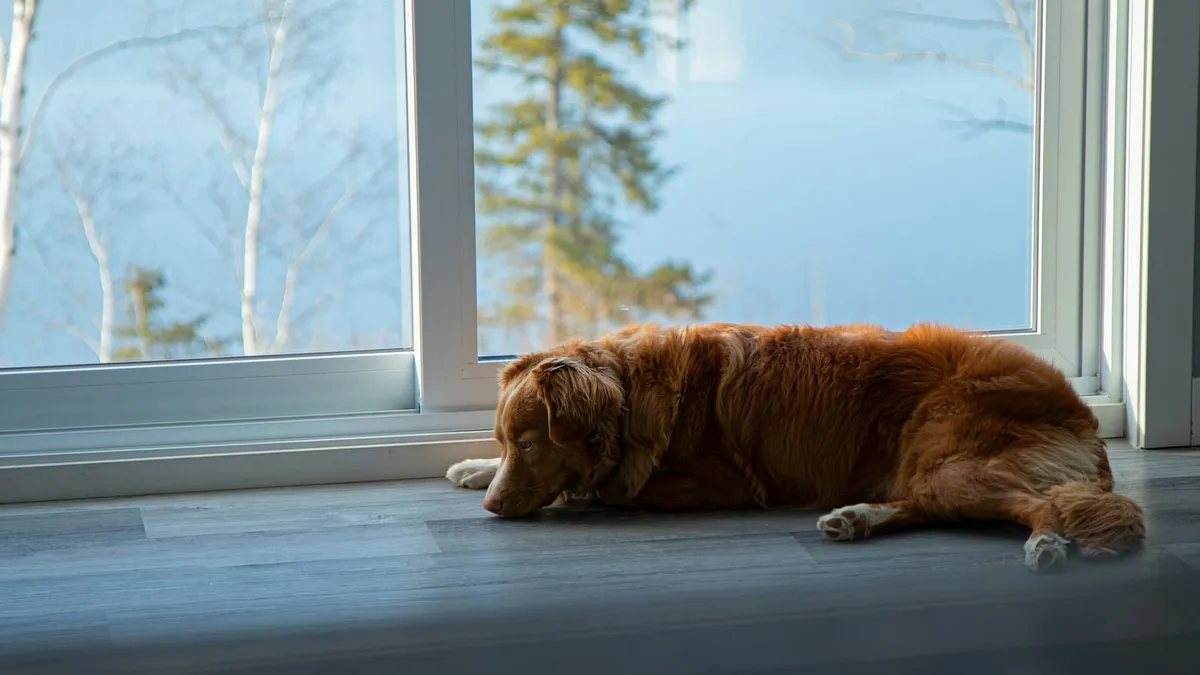
On this page
For most of the summer, someone has been home. There have been people in and out of the kitchen all day, someone to follow from room to room, and a walk whenever anybody felt like it. Then one Monday in September the door closes at eight in the morning and the house is silent until mid-afternoon.
Nothing about that was explained to your dog. The change is abrupt and total, and it arrives without warning. The dogs who struggle most with it are very often the ones who had the best summer. This is also one of the few behavior problems you can see coming weeks ahead, which means most of the work can be done before it starts.
Key Takeaways
- Start two to three weeks before the schedule changes, not on the first morning of term.
- Build alone time in small, boring increments, so that departures stop being an event.
- Shift meal times, walk times and attention onto the new schedule before the new schedule arrives.
- Restlessness for a week or two is normal adjustment. Panic, destruction at exit points or house soiling is not, and needs a different plan.
Why This Transition Is Harder Than It Looks
Dogs run on routine far more than most owners realize. It isn’t only the company they lose in September. It’s the predictability. Over a summer, a dog learns a pattern: people are around, food comes at loose times, the door opens often. That pattern becomes the baseline for what normal feels like.
When it changes overnight, two things happen at once. The dog is alone for a long stretch for the first time in weeks, and every other anchor in the day has moved as well. Handling one of those is manageable. Handling all of them on the same morning is what turns an adjustment into a problem.
There’s a second factor that gets less attention. A dog who spent the summer with a household of people around has had very little practice at being bored. Settling alone in a quiet house is a skill, and skills fade when they go unused.
Start Three Weeks Out: Rebuild Alone Time
Make Departures Boring Again
Long, emotional goodbyes teach a dog that your leaving is significant. So does an excited reunion at the door. Both raise the stakes around the one moment you want your dog to find unremarkable.
Practise leaving without leaving. Pick up your keys and put them down. Put your shoes on and then make a cup of tea. Open the front door, step out, and come straight back in. Repeat until your dog stops lifting their head, which is exactly the response you’re aiming for.
Build the Duration in Small Steps
Start with absences your dog can already handle comfortably, even if that’s two minutes, and extend only once they’re settling at the current length. The temptation is to jump ahead because term starts soon. Resist it. A dog who panics at forty minutes has learned something you’ll then have to undo, and undoing takes longer than building slowly would have.
A reasonable progression over a couple of weeks might run from a few minutes, to a trip to the shop, to an hour or two, to something close to a real school day. Some dogs move faster than that and some slower. The dog decides which.
Give the Alone Time a Shape
An empty stretch is harder than an occupied one. A long-lasting chew or a food puzzle given as you leave does two useful things. It occupies the first ten or fifteen minutes, which is when most dogs are least settled, and it builds an association between your departure and something good.
Feed part of the daily ration this way instead of adding calories on top. If you’re not sure what the daily total should be, our dog food calculator works it out from weight, age and activity.
Move the Whole Day, Not Just the Absences
Shift Meal Times Gradually
If breakfast has been drifting later all summer, walk it back toward the term-time hour by fifteen or twenty minutes every few days. Dogs anticipate meals keenly, and a meal that suddenly arrives ninety minutes early or late is its own small stress on a morning that already has plenty.
Move the Walk Before You Need To
Whatever the exercise pattern will be in term time, whether that’s early morning, after school, or split across both, start running it now. A dog who has been walked at eleven in the morning all summer will spend the first week of September restless at eleven in the morning, whatever happened at seven.
Practise the Real Morning
A week out, run the actual sequence once or twice: the alarm, the rush, the bags, the door. Then come back after an hour. By the time it matters, the choreography of a school morning is already familiar and predicts nothing alarming.
What Normal Adjustment Looks Like
For most dogs the first fortnight involves some combination of:
- Following people more closely than usual when they are home
- Restlessness or pacing in the half hour around the usual departure time
- A quieter, sleepier dog in the afternoons, often just the new rhythm settling in
- More enthusiastic greetings than you’d like at the end of the day
- Some vocalizing shortly after everyone leaves, tailing off after ten or twenty minutes
These generally ease week by week. If they’re easing, the plan is working, and the answer is consistency rather than a change of approach.
What Isn’t Normal, and What to Do About It
Some signs point past adjustment and toward genuine separation anxiety, which is a panic response rather than a preference:
| Sign | Why it matters |
|---|---|
| Destruction concentrated at doors, windows or frames | This is escape behavior, not boredom chewing. The target tells you which |
| House soiling in a dog who is reliably house-trained | Panic overrides training. It isn’t a lapse in manners |
| Barking or howling that continues for the whole absence | Distress that doesn’t settle, rather than a protest that fades |
| Injury to paws, mouth or nails from trying to get out | Warrants a vet visit and a proper behavior plan, not more practice |
| Drooling, or refusing food left with them, every single time | A dog too stressed to eat is well past mild unease |
If you’re seeing these, more repetitions of the same routine won’t fix it, and leaving the dog longer in the hope they get used to it tends to make it worse. That’s the point to involve your vet, partly to rule out medical causes for soiling or restlessness, and partly because moderate cases often need a structured desensitization plan, sometimes with medication alongside it.
If Nobody Will Be Home for a Full School Day
Be honest about the length of the gap. A dog left from eight until four is being asked for eight hours, and for many dogs, puppies and seniors especially, that is simply too long however well the transition was handled. Options worth costing out before term rather than during it:
- A midday walker, even two or three days a week
- Daycare for the longest days
- A neighbour or family member for a lunchtime letout
- Staggering household departures so the house empties later
None of these is an admission of failure. The alternative, a dog holding on for eight hours in an empty house every weekday, is a welfare question rather than a training one.
Frequently Asked Questions
How far in advance should I start preparing my dog for school starting? Two to three weeks works for most dogs, and the gradual build matters more than the exact number of days. A dog who has had company almost constantly for eight weeks needs time to relearn that an empty house is ordinary, and that relearning goes better in small steps than in one abrupt Monday morning.
Will my dog get separation anxiety when the kids go back to school? Most dogs are restless for a while and settle within a couple of weeks. True separation anxiety is a panic response rather than a dog who misses the company, and it looks different: destruction focused on doors and windows, house soiling in a fully trained dog, or attempts to escape that risk injury. Those signs need a proper plan, not more time.
Should I get a second dog so mine isn’t alone? Not as a fix for this. Dogs who struggle with being left are usually attached to their people, not simply averse to an empty room, so a second dog often doesn’t address it. You have also doubled the animals in a household that is about to get busier. Decide on a second dog on its own merits.
Is it better to leave my dog in a crate or loose in the house while everyone’s out? It depends on the individual dog. A dog who already treats a crate as their own den often settles better in one. A dog who has never been properly conditioned to a crate, or who panics when confined, can be made considerably worse by it. Use whichever setup your dog actually relaxes in, and don’t introduce a crate for the first time the week school starts.
The takeaway
The September transition is unusual among dog problems in that you know the date it arrives. Three weeks of unremarkable departures, a meal schedule that moves before the humans do, and an honest look at how long the house will actually be empty will carry most dogs through with nothing worse than a fortnight of clinginess. If what you see instead is panic, that’s useful information early, and far easier to work on in August than in the middle of term. For a sense of how much company different dogs tend to need in the first place, our guide to the best breeds for first-time owners covers temperament alongside the practical demands.
This article is for general informational purposes and is not a substitute for veterinary advice. For persistent or severe distress when left alone, consult your veterinarian or a certified dog behaviorist.
Sources
Related articles

Resource Guarding in Dogs: Why It Happens and How to Address It
Growling over food or toys is called resource guarding. Learn why dogs guard resources, how to recognize early signs, and humane training steps to address it.
Puppy Biting and Nipping: Why It Happens and How to Stop It
Puppy biting is normal but can be trained away. Learn why puppies nip, bite-inhibition techniques, and step-by-step ways to teach gentle play without punishment.

Why Does My Dog Bark So Much? Causes and How to Stop Excessive Barking
Excessive dog barking usually has a specific cause. Learn why dogs bark too much and proven, humane training methods to reduce it, without punishment.